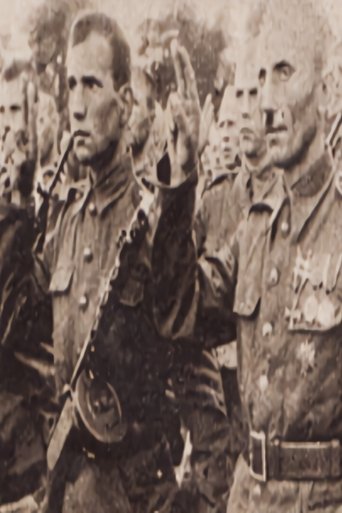
A 1945 Soviet war film which, along with the second part of Eisenstein's Ivan the Terrible was harshly criticized by Andrei Zhdanov and banned. A version of the film, released in 1956 during the Khrushchev Thaw, was disowned by director Grigori Kozintsev because the reediting was done without his participation.
In Wales during World War Two, a German airman crash-lands in a wood and is found by 12-year-old Elenya. She decides to keep him a secret.
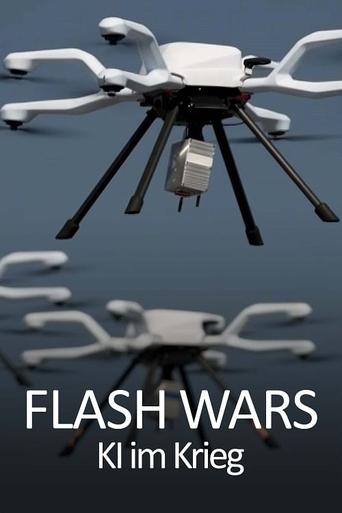
“Fear AI!” – “ warns Elon Musk back in 2014, joining other opinion leaders like Steve Wozniak, Noam Chomsky and Stephen Hawking in backing a petition against the development of autonomous weapons. As Vladimir Putin stated in 2017, “Whoever leads in AI, rules the world.”
The film chronicles the ascent of Shivaji, the great Maratha warrior who fought for liberty from the erstwhile Muslim rulers in order to establish a secular Hindu kingdom.
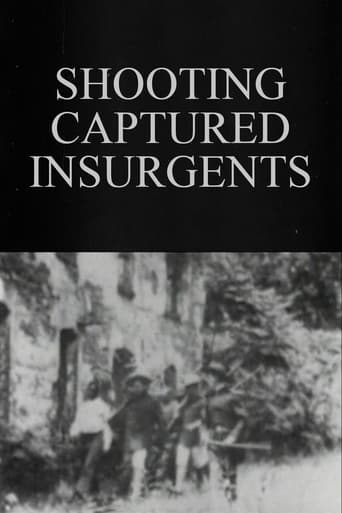
“A file of Spanish soldiers line up the Cubans against a blank wall and fire a volley. The flash of rifles and drifting smoke make a very striking picture.” (Edison film catalog)
A demolition squad searches for how the Germans are getting tanks across a river. An Italian boy leads them to a bridge under the surface of the water.
Young Grizhka finds a Red Army cap and decides to join the fight against the White Army, He is liked by the Red Army commander, but not so by a cruel White officer. The film shows the courage and loyalty of the children in the face of war.
This film of three parts recalls memories from World War II. The titles of the parts are: Impartially, Terrified and Like a scream.
Their family name alone evokes horror: Himmler, Frank, Goering, Hoess. This film looks at the descendants of the most powerful figures in the Nazi regime: men and women who were left a legacy that indelibly associates them with one of the greatest abominations in history. What is it like to have grown up with a name that immediately raises images of genocide? How do they live with the weight of their ancestors' crimes? Is it possible to move on from the crimes of their ancestors?
In 1937, when the July 7 Incident broke out, the Japanese army started to invade China and plundered China's strategic resources such as gold to pay for military expenses. The Eighth Route Army Jiaodong Military Region fighters and hunters Yu Dongfeng and other people together with the bloodbath, through the hardships of thousands of miles to transport gold, fighters and the people and the Japanese invaders launched a protracted life-and-death struggle, and ultimately transported the gold to the Party Central Committee in Yan'an, a powerful support for the national war of resistance.
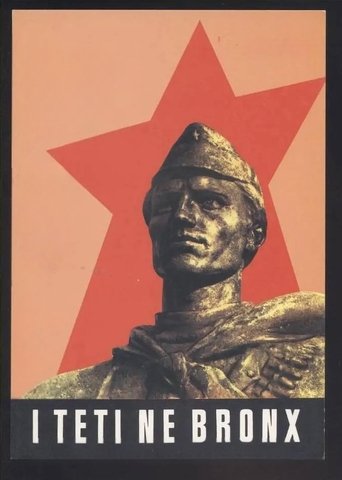
On the anniversary of the death of Commissioner Ibrahim Kovaçi, six of his war friends are accompanying his statue to his native village, where a ceremony will be held. During the road, each of them remembers moments related to the life of Ibrahim.
First Invasion: The War of 1812, a History Channel documentary that first aired in 2004, portrays a young United States of America "on the brink of annihilation" as it battles the largest and most powerful empire on earth. Critics say the documentary is far too pro-American, and that it ignores or downplays crucial elements of the War of 1812. Others praise First Invasion for its compelling presentation of a far too neglected period of history.
A typical working family have to cope with living through the Blitz, adapting to its privations, and eventually making the ultimate sacrifice for king & country.
A story about a colonel Denis Davydov - hero of the 1812 war.
While Nazi ideology dominated Europe, Adolf Hitler used all dogmas to his advantage and fed the cult of his personality. How did the Führer manage to transform the Bible, the Church and the symbols of Christianity into instruments of power, winning the support of the Germans? This documentary traces the rise of a little-known theological organization: the “German Christians”, which became the most powerful propaganda tool of the Third Reich.
Rommel's last open port is maintained by POW labor against Allied bombing. A commando operation is undertaken to liberate the prisoners.
Autumn 1941. German tank troops are making another attempt to break through to the Uritsk and Pulkovo Heights. During heavy fighting, Soviet troops managed to stop the offensive of fascist tanks one and a half kilometers south of the Pulkovo Observatory. The 900 days of the blockade and the incredible courage of the Soviet people were approaching ...
Activate Your Account!
You must create an account to continue watching