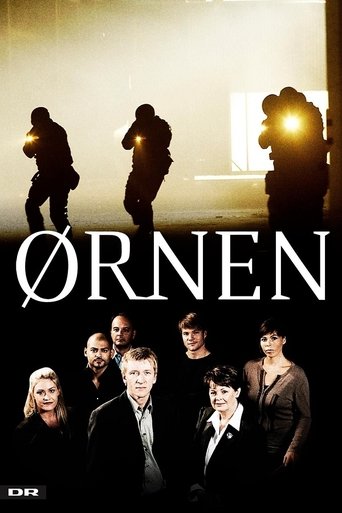
The Eagle: A Crime Odyssey is a Danish police procedural television series produced by Danmarks Radio, created and written by Peter Thorsboe and Mai Brostrøm. The series debuted on 10 October 2004 in Denmark. It won an International Emmy Award from the International Academy of Television Arts & Sciences for best non-American television drama series in 2005. There were three seasons; the second season premiered in Denmark on 9 October 2005 and the third on 8 October 2006. The last episode originally aired in Denmark on 26 November 2006. The series was filmed on location in various parts of northern Europe, from Berlin and Copenhagen to Oslo and other locations including Iceland. The series has enjoyed particular success in Australia, where it airs on SBS and is available on DVD with English subtitles.
Girls' Generation - Oh!GG's variety show in France to promote their debut single "Lil' Touch".
Kodaka Hasegawa has just transferred to St. Chronica's Academy and he's having a hard time making friends. With his naturally blond hair and fierce looking eyes, people constantly mistake him for a delinquent. One day, he runs into his bad-tempered loner of a classmate, Yozora, while she's talking to her imaginary friend, Tomo. Since neither of them have any friends, they decide to form a club and start recruiting some. Little by little, lonely classmates join their club to learn how to build friendships through cooking together, playing games, and other group activities. But, with so many misfits, will the club members really be able to get along?
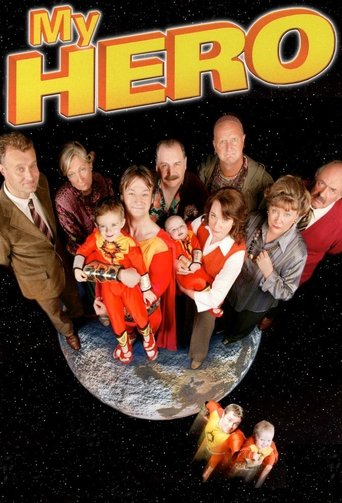
My Hero is a BBC sitcom created by Paul Mendelson. The programme ran for six series, first broadcast in February 2000, and concluding in September 2006. The series follows the antics of the dim-witted superhero "Thermoman", portrayed by Ardal O'Hanlon in series one to five and by James Dreyfus in the final series. The series was regularly directed by John Stroud. In the UK, the digital channel Gold regularly re-runs the programme, although the last series has yet to appear on the channel. In the United States it was shown on PBS and, briefly, BBC America. In Australia, UKTV offered re-runs of the first three series, while BBC Entertainment provided repeats for Scandinavia.
Healthcare reform in Hong Kong is a controversial topic. The government plans to privatize public hospitals and raise funds to maintain operations. Marshall Paxton, a leading public hospital, has become a pilot for reform. This drama focuses on the everyday workings of medical professionals and the politics behind the healthcare industry in Hong Kong.
The ancient demon, Dongfang Qingcang, who has been suppressed for a thousand years, comes back to the three worlds and starts a war between immortals and demons the moment he is reborn. In order to get out, the demon lord swaps souls with the immortal Lan Hua, who has difficulty controlling her magic power, and accidentally kills her immortal body. In desperation, the two embarked on a journey to find a new body. Along the way, the two experienced all sorts of things, fighting and joking, and Lan Hua started to develop feelings for Dongfang Qingcang, but little does she know that all this time, Dongfang Qingcang only used her as a tool to resurrect the ancient god of war Chi Di, and under the calm a larger conspiracy is also quietly carried out ......
The Pepsi-Cola Playhouse is an American dramatic anthology series that aired on ABC from 1953 to 1955, sponsored by Pepsi-Cola. The show was hosted by Arlene Dahl, Anita Colby, and, finally, Polly Bergen
Heathcliff is an animated TV series that debuted on October 4, 1980. It was the first series based on the Heathcliff comic strip and was produced by Ruby-Spears Productions. It ran until September 18, 1982 with a total of 25 episodes, under two different names.
Kidnapped is an American television drama series from Sony Pictures Television which aired on NBC from September 20, 2006, to August 11, 2007. The series returned on Universal HD in 2008.
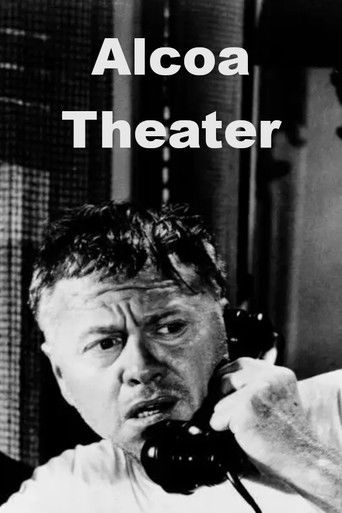
Alcoa Theatre is a half-hour American anthology series telecast on NBC at 9:30 pm on alternate Monday nights from October 7, 1957 to September 16, 1960. The program also aired under the title Turn of Fate, with the stories depicting the difficulties faced by individuals who are suddenly thrust into unexpected and perilous dangers. Alcoa Theatre was syndicated together with Goodyear Theatre as Award Theatre. In 1955, The Alcoa Hour premiered in a one-hour format aired on Sunday nights, but it was reduced to 30 minutes, retitled Alcoa Theatre, and moved to Monday evening in 1957. The show employed an alternating rotating company of actors: David Niven, Robert Ryan, Jane Powell, Jack Lemmon and Charles Boyer. Each appeared in dramatic and light comedic roles through the first season.
Residing within Tokyo’s district of Ueno are the Colors, three individuals who protect their city by performing good deeds and aiding their community. Or, at the very least, they pretend to be the city’s defenders. In reality, the Colors are just three young girls who spend their time playing make-believe and exploring the city. The Colors’ activities are facilitated by the grandfatherly Daigorou "Pops" Kujiraoka, who uses his store’s inventory of knick-knacks to entertain the rambunctious trio. Not everyone is a fan of the Colors though. The local policeman Saitou just wants to deal with his regular duties, but he often finds himself the target of the Colors’ attention, having been made the villain in most of their fantasies. But despite his personal feelings, Saitou always finds the time to go along with the three girls’ games. Even though the Colors do not actually defend Ueno, they definitely help brighten everyone’s day.
Ju-yeon subs in on an R-rated dating reality show. Intimate contact is mandatory and bedmate swaps every night! Ex-boyfirend Inho, nice Jae-hee, and sexy Se-heon is waiting for her in the sharehouse. And their exes start moving in... Participants approach her through a moral-bending rule. Romance vs Money, Instinct vs Reason. Ju-yeon's shaky decision-making begins.
An unconventional woman, but with extraordinary intelligence but no one could have imagined it, and a quirky police officer, who suddenly has to work with her to solve crimes!
Welcome to the world’s premier bridal salon, Kleinfeld Bridal. Part fashion show, part bridal story, part family therapy…Randy Fenoli & a team of specialists guide brides through the process of selecting, altering & delivering each dress in time for their perfect day.
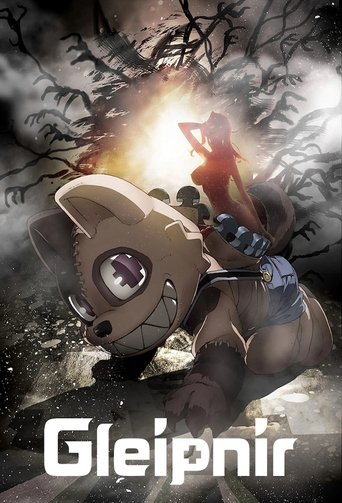
Shuichi Kagaya is an ordinary high school kid in a boring little town. But when a beautiful classmate is caught in a warehouse fire, he discovers a mysterious power: he can transform into a furry dog with an oversized revolver and a zipper down his back. He saves the girl’s life, sharing his secret with her. But she’s searching for the sister who killed her family, and she doesn’t care how degrading it gets: she will use Shuichi to accomplish her mission…
Follows a best-selling author of a self-help book series who is secretly hiding her separation from her husband as she starts to navigate her life as a single woman in her 40's in Los Angeles. She starts to side with and take advice more from her divorced friends rather than her married ones and it leads her to some unexpected and life-changing experiences.
The Seigaku tennis club has been invited to train at the U-17 (Under 17) camp. Seigaku is one of the 50 middle schools invited and must compete with high school players to prove they are just as good.
Being a teenager is hard enough. Being a Wolfblood teenager is ten times more complicated. 14 year old Maddy loves her abilities - heightened senses, being faster, stronger and more graceful - but hates the secrets that come with them.
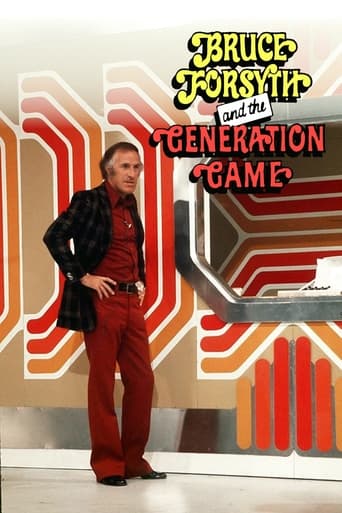
The Generation Game was a British game show produced by the BBC in which four teams of two competed to win prizes. The programme was first broadcast in 1971 under the title Bruce Forsyth and the Generation Game and ran until 1982, and again from 1990 until 2002. The show was based on the Dutch TV show Een van de acht, "One of the Eight", the format devised in 1969 by Theo Uittenbogaard for VARA Television. Mrs. Mies Bouwman - a popular Dutch talk show host and presenter of the show - came up with the idea of the conveyor belt. She had seen it on a German programme and wanted to incorporate it into the show. Another antecedent for the gameshow was 'Sunday Night at the London Palladium' on ATV, which had a game called Beat the Clock, taken from an American gameshow. It featured married couples playing silly games within a certain time to win prize money. This was hosted by Bruce Forsyth from 1958, and he took the idea with him when he went over to the BBC.
Activate Your Account!
You must create an account to continue watching